How to Calibrate a Pressure Gauge to Get Accurate Readings
Leave a message
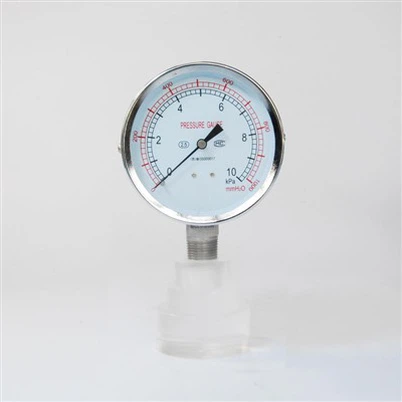
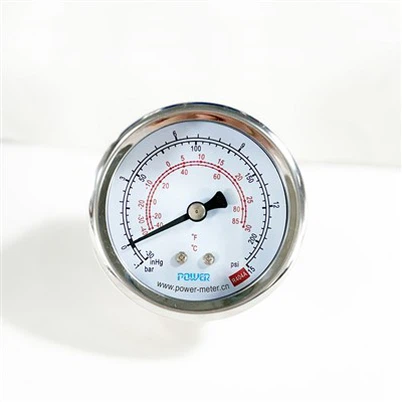
Whether it is monitoring boiler pressure, power plant operation, or laboratory precision measurements, the readings of the pressure gauge are directly related to the safety of the equipment. However, during prolonged use, the pressure gauge may experience deviations in its readings. In order to ensure the accuracy of its measurement results, it is important to calibrate the pressure gauge regularly.
Why is the pressure gauge inaccurate?
The reason why a pressure gauge needs to be calibrated is because its core measurement components - such as spring tubes, gear transmission systems, etc. - will gradually deviate from the original set value due to metal fatigue, minor deformation, dust intrusion, or insufficient lubrication during use. Especially pressure gauges used in high-frequency vibration, high temperature, high humidity, corrosive gas or liquid environments are more likely to have problems such as zero point drift, reduced sensitivity, and stuck pointers. These deviations are usually not directly identifiable with the naked eye, but may lead to major misjudgments. For example, an inaccurate pressure gauge that displays "normal" pressure may conceal the actual overpressure status of the equipment, thereby causing a safety incident. Therefore, regular calibration is required to identify deviations and eliminate hidden dangers.
Before performing the calibration operation, a series of preparations must be completed to ensure the accuracy of the calibration results. First of all, it is necessary to confirm that the standard instruments used for calibration (such as standard pressure source, digital standard pressure gauge) have been verified by an authoritative organization and are within the valid verification period. Secondly, the calibrated pressure gauge should be removed from the system, wiped clean to ensure there is no dust or oil, and check whether the surface glass is intact and whether the pointer has returned to zero. For oil-filled pressure gauges, it is also necessary to confirm that the oil in the gauge has not leaked or deteriorated. Then, a vibration-free and constant-temperature environment should be selected for calibration to avoid temperature and humidity fluctuations from interfering with the results.

Calibration standard steps and operating logic

The pressure gauge calibration process mainly includes two stages: forward pressure and reverse pressure relief. Each stage must be compared according to equally spaced pressure points. When calibrating, first connect the pressure gauge, standard pressure source and standard pressure gauge in the same system through a tee or calibration joint to ensure that the measured gauge and the standard gauge are under the same pressure condition. Then, slowly increase the pressure from zero, staying at several key nodes of 25%, 50%, 75%, and 100% of the full scale, and record the reading difference between the meter under test and the standard meter at each point. After pressurizing to full scale, slowly release the pressure in the same reverse order and record the reading again. During this process, if it is found that the return stroke of the gauge needle is inconsistent with the reading during pressurization, it indicates that there is a lag or mechanical jamming problem.
After all readings are completed, the error value of each point needs to be calculated and compared with the allowable error range. If the error exceeds the standard limits, adjustments need to be made, for example by adjusting the zero screw, pointer position, or even replacing worn parts. Finally, the calibration results will be formed into a complete report, recording each step and conclusion as a basis for future quality traceability.
How to judge whether the calibration frequency is reasonable
The setting of the calibration frequency is not one-size-fits-all, but should comprehensively consider the application scenarios, frequency of use, accuracy level and dependence on the measurement results of the pressure gauge. For pressure gauges with higher precision levels (such as pressure gauges used in laboratories, scientific research or product quality testing), they should be calibrated at least every three months; while for auxiliary pressure gauges for general industrial use, they can be calibrated once every six months or once a year. In addition, if the pressure gauge has experienced severe vibration, dropped, flooded or abnormal readings, it must be calibrated immediately.
Record after calibration
Completing calibration is not the end of the task, but the continuation of the equipment management chain. First, a clear "calibration label" must be attached to the pressure gauge being calibrated, indicating the calibration date, next calibration time and the person in charge. Secondly, the calibration data of the pressure gauge should be entered into the equipment archive system to establish a complete calibration record and periodic tracking mechanism. If the pressure gauge is found to have an error during the calibration process and cannot be zeroed, it should be stopped and replaced.