What is the difference between a direct - reading and an indirect - reading CNG gauge?
Leave a message

Hey there! As a CNG gauge supplier, I've been getting a bunch of questions lately about the difference between direct - reading and indirect - reading CNG gauges. So, I thought I'd sit down and write this blog to clear things up for you all.
Let's start with the basics. CNG, or Compressed Natural Gas, is a popular alternative fuel source. It's clean, efficient, and widely used in vehicles and industrial applications. And a CNG gauge is an essential tool for measuring the pressure of the CNG in storage or in use.
Direct - Reading CNG Gauges
A direct - reading CNG gauge is exactly what it sounds like. It directly measures the pressure of the CNG. These gauges are usually installed directly on the CNG storage tank or the pipeline. They have a simple and straightforward design.
One of the biggest advantages of direct - reading gauges is their accuracy. Since they're in direct contact with the CNG, they can provide real - time and precise pressure readings. This is crucial in applications where accurate pressure monitoring is essential, like in high - pressure CNG storage systems.
Another great thing about direct - reading gauges is their reliability. They don't rely on any external sensors or complex algorithms to work. They have fewer components that can break down, which means less maintenance and fewer chances of malfunctions.
However, direct - reading gauges also have some drawbacks. For one, they can be a bit limited in terms of installation. Since they need to be directly connected to the CNG source, they might not be suitable for all setups. Also, in some cases, they can be a bit more expensive upfront compared to indirect - reading gauges.


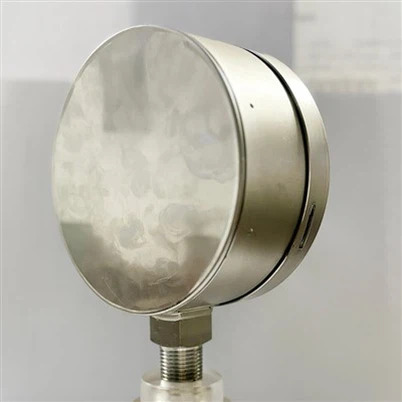
If you're interested in direct - reading gauges, you might want to check out our Inner Sensor CNG Gauge. It's a top - of - the - line product that offers great accuracy and reliability.
Indirect - Reading CNG Gauges
Now, let's talk about indirect - reading CNG gauges. These gauges don't measure the pressure of the CNG directly. Instead, they use other methods to estimate the pressure.
One common way indirect - reading gauges work is by measuring other variables related to the CNG, like temperature or flow rate, and then using mathematical models to calculate the pressure. This approach can be quite useful in situations where direct measurement is difficult or not practical.
Indirect - reading gauges are often more flexible in terms of installation. Since they don't need to be directly connected to the CNG source, they can be installed in a wider range of locations. This makes them a great choice for complex or hard - to - reach setups.
They're also generally more cost - effective upfront. If you're on a tight budget, an indirect - reading gauge might be the way to go.
But there are some downsides to indirect - reading gauges as well. Their accuracy is usually not as high as that of direct - reading gauges. Since they rely on calculations and models, there's always a margin of error. Also, they can be more complex to set up and calibrate.
If you're considering an indirect - reading gauge, our Outer Sensor CNG Gauge is a great option. It offers good performance at an affordable price.
Key Differences in a Nutshell
Let's summarize the main differences between direct - reading and indirect - reading CNG gauges:
- Accuracy: Direct - reading gauges are generally more accurate as they measure the pressure directly, while indirect - reading gauges rely on calculations and have a margin of error.
- Installation: Direct - reading gauges need to be directly connected to the CNG source, which can limit their installation options. Indirect - reading gauges are more flexible in terms of installation.
- Cost: Direct - reading gauges are usually more expensive upfront, while indirect - reading gauges are more cost - effective initially.
- Complexity: Direct - reading gauges are simpler in design and operation, with fewer components. Indirect - reading gauges can be more complex to set up and calibrate.
Which One Should You Choose?
The choice between a direct - reading and an indirect - reading CNG gauge depends on your specific needs. If you need high - accuracy pressure readings and don't mind the higher upfront cost and installation limitations, a direct - reading gauge is the way to go. On the other hand, if you're on a budget, need more flexibility in installation, and can tolerate a slightly lower level of accuracy, an indirect - reading gauge might be a better fit.
As a CNG gauge supplier, we have a wide range of products to meet different requirements. Whether you're looking for a direct - reading or an indirect - reading gauge, we can help you find the right one for your application.
If you're interested in learning more about our CNG gauges or want to start a procurement discussion, don't hesitate to reach out. We're here to answer all your questions and help you make the best decision for your business.
References
- Industry standards and guidelines for CNG pressure measurement.
- Technical manuals of CNG gauges.
- Personal experience and knowledge gained from years in the CNG gauge supply business.