How does temperature affect the reading on a car tire gauge?
Leave a message

Temperature is a crucial environmental factor that can significantly influence the accuracy of readings on a car tire gauge. As a dedicated car tire gauge supplier, I have witnessed firsthand how temperature variations can affect these readings and the importance of understanding this phenomenon for both drivers and automotive professionals. In this blog post, I will delve into the scientific principles behind the relationship between temperature and tire gauge readings, explore the practical implications, and provide insights on how to mitigate potential issues.
The Scientific Principles
To understand how temperature affects tire gauge readings, we must first grasp the fundamental principles of gas behavior. According to the ideal gas law, the pressure (P), volume (V), and temperature (T) of a gas are related by the equation PV = nRT, where n is the number of moles of gas and R is the ideal gas constant. In the context of a car tire, the volume of the tire remains relatively constant, and the amount of air inside the tire (n) also remains stable under normal conditions. Therefore, the pressure inside the tire is directly proportional to its temperature.
When the temperature of the air inside the tire increases, the kinetic energy of the gas molecules also increases. This causes the molecules to move more rapidly and collide with the inner walls of the tire more frequently and forcefully, resulting in an increase in pressure. Conversely, when the temperature decreases, the kinetic energy of the gas molecules decreases, leading to fewer and less forceful collisions and a corresponding decrease in pressure.
Practical Implications
The impact of temperature on tire gauge readings has several practical implications for drivers and automotive professionals. Firstly, it is important to note that tire pressure should always be measured when the tires are cold, meaning the vehicle has not been driven for at least three hours or has been driven for less than one mile at a moderate speed. This is because driving generates heat, which causes the air inside the tires to expand and the pressure to increase. If tire pressure is measured when the tires are hot, the reading will be higher than the actual cold tire pressure, potentially leading to under-inflation if the driver adjusts the pressure based on the hot reading.
For example, let's say the recommended cold tire pressure for a particular vehicle is 32 psi. If the tires are hot due to driving, the pressure reading on the tire gauge may be 35 psi. If the driver, unaware of the temperature effect, releases air from the tires to bring the pressure down to 32 psi, the tires will actually be under-inflated when they cool down. Under-inflated tires can lead to a variety of problems, including reduced fuel efficiency, uneven tire wear, and increased risk of tire failure.
Secondly, temperature fluctuations can also affect tire pressure over time. In regions with significant temperature variations between day and night or between seasons, tire pressure can change significantly. For instance, during the winter months, when temperatures are lower, tire pressure can drop by several psi. This is why it is important to check tire pressure regularly, especially during extreme temperature changes, and adjust the pressure as needed to maintain the recommended level.
![_D{7[ALW]ENC3[N63W{HRVU_tmb(001)](/uploads/42773/40mm-dial-tire-gauge2024103103575098240.jpg)

In addition to affecting tire pressure, temperature can also impact the accuracy of the tire gauge itself. Most tire gauges are designed to operate within a certain temperature range, typically between -20°C and 60°C (-4°F and 140°F). If the temperature falls outside this range, the gauge may become less accurate, leading to incorrect pressure readings. Some high-quality tire gauges are designed to be more resistant to temperature variations, but it is still important to use the gauge within its specified temperature range for the most accurate results.
Mitigating Potential Issues
To mitigate the potential issues caused by temperature variations on tire gauge readings, there are several steps that drivers and automotive professionals can take. Firstly, as mentioned earlier, always measure tire pressure when the tires are cold. This will ensure that the reading is as accurate as possible and reflect the actual pressure inside the tires.
Secondly, invest in a high-quality tire gauge that is designed to be accurate and reliable, even in extreme temperatures. Look for gauges that are made from durable materials and have been tested and calibrated to meet industry standards. Some gauges also come with additional features, such as a built-in thermometer or a backlit display, which can make it easier to take accurate readings in different conditions.
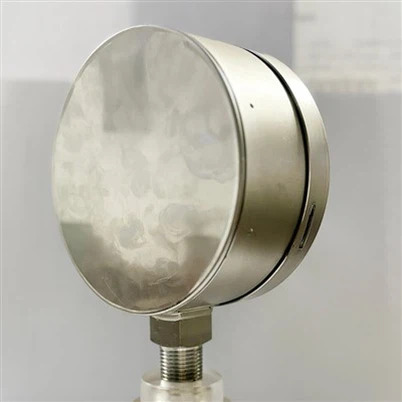
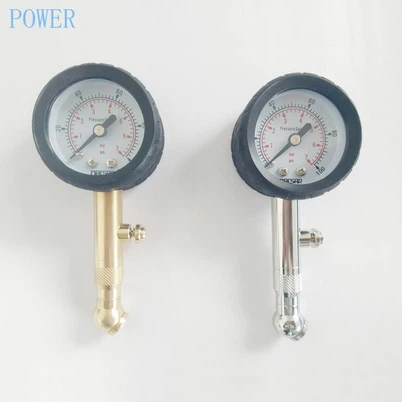
63mm Dial Tire Gauge is one such high-quality option that offers accurate readings and a clear, easy-to-read dial. Its large size and durable construction make it suitable for both professional and DIY use. Similarly, the 40mm Dial Tire Gauge is a compact and portable option that is perfect for on-the-go use.
Thirdly, keep track of temperature changes and adjust tire pressure accordingly. During the winter months, when temperatures are lower, check tire pressure more frequently and add air as needed to maintain the recommended level. Conversely, during the summer months, when temperatures are higher, be aware that tire pressure may increase and check the pressure regularly to ensure it does not exceed the maximum recommended level.
Finally, if you are unsure about how to measure tire pressure correctly or how to adjust it based on temperature changes, consult your vehicle's owner's manual or a qualified automotive professional. They can provide you with specific guidance and recommendations based on your vehicle's make and model.
Conclusion
In conclusion, temperature is a significant factor that can affect the reading on a car tire gauge. Understanding the scientific principles behind the relationship between temperature and tire pressure, as well as the practical implications, is essential for maintaining proper tire inflation and ensuring the safety and performance of your vehicle. By following the tips and recommendations outlined in this blog post, you can minimize the impact of temperature variations on tire gauge readings and keep your tires in optimal condition.
As a car tire gauge supplier, I am committed to providing high-quality products and accurate information to help drivers and automotive professionals make informed decisions about tire maintenance. If you have any questions or would like to learn more about our products, please do not hesitate to contact us. We are always happy to assist you with your tire gauge needs and look forward to the opportunity to discuss potential procurement and business opportunities.
References
- Halliday, D., Resnick, R., & Walker, J. (2014). Fundamentals of Physics. Wiley.
- Society of Automotive Engineers (SAE). (2016). Recommended Practice for Measuring Tire Pressure. SAE J1262.