Can a general pressure gauge measure negative pressure?
Leave a message

Can a General Pressure Gauge Measure Negative Pressure?
As a supplier of general pressure gauges, I often encounter questions from customers about the capabilities of these instruments. One of the most frequently asked questions is whether a general pressure gauge can measure negative pressure. In this blog post, I will delve into this topic and provide a comprehensive answer.
Understanding General Pressure Gauges
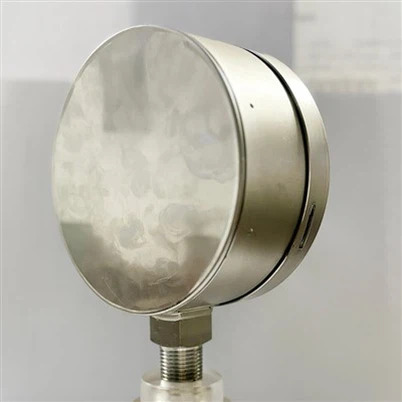
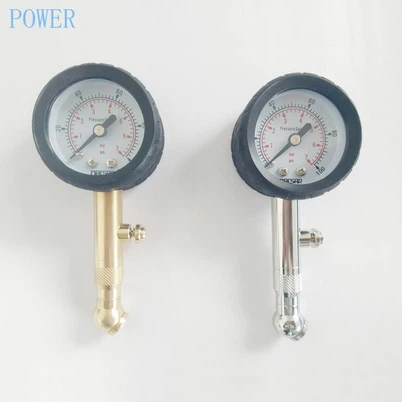
General pressure gauges are widely used in various industries to measure the pressure of liquids and gases. They come in different types, including Bottom Connection Black Steel Case Pressure Gauge, Bottom Connection Stainless Steel Case Pressure Gauge, and Panel Mount Stainless Steel Case Pressure Gauge. These gauges typically operate based on the principle of mechanical deformation. For example, a Bourdon tube pressure gauge, which is a common type of general pressure gauge, consists of a curved tube that straightens when pressure is applied. This movement is then translated into a reading on the gauge dial.
Most general pressure gauges are designed to measure positive pressure, which is the pressure above atmospheric pressure. The scale on these gauges usually starts from zero and goes up to a certain maximum value, indicating the pressure relative to the surrounding atmosphere. However, the question remains: can they also measure negative pressure?
What is Negative Pressure?
Negative pressure, also known as vacuum pressure, refers to a pressure that is lower than the atmospheric pressure. In a negative pressure environment, the pressure inside a system is less than the pressure outside. This can occur in various applications, such as vacuum pumps, suction systems, and some industrial processes where a partial vacuum needs to be created.
Can General Pressure Gauges Measure Negative Pressure?
The answer is yes, but with some limitations. Some general pressure gauges are designed to measure both positive and negative pressure. These gauges have a scale that includes negative values, typically starting from zero (atmospheric pressure) and going down to a certain negative value, indicating the degree of vacuum.
For example, a compound pressure gauge is a type of general pressure gauge that can measure both positive and negative pressure. It has a dual-scale design, with one part of the scale showing positive pressure values and the other part showing negative pressure values. When the pressure in the system is below atmospheric pressure, the pointer on the gauge moves towards the negative side of the scale, providing a reading of the vacuum pressure.
However, not all general pressure gauges are capable of measuring negative pressure. Some gauges that are specifically designed for positive pressure only do not have the necessary mechanism or scale to measure negative values. Attempting to use a positive-only pressure gauge to measure negative pressure may lead to inaccurate readings or even damage to the gauge.


Factors to Consider
When using a general pressure gauge to measure negative pressure, several factors need to be considered:
- Gauge Design: As mentioned earlier, the gauge must be designed to measure negative pressure. Check the specifications of the gauge to ensure that it has a negative pressure scale.
- Accuracy: The accuracy of a gauge when measuring negative pressure may be different from its accuracy when measuring positive pressure. The gauge's performance may be affected by factors such as the type of measuring element, the quality of the manufacturing, and the range of negative pressure being measured.
- Range: Make sure that the negative pressure range of the gauge is suitable for your application. If the expected negative pressure is very low, you may need a gauge with a wider negative pressure range.
- Environmental Conditions: The environmental conditions can also affect the gauge's ability to measure negative pressure. For example, extreme temperatures, humidity, and the presence of corrosive substances can all impact the gauge's performance.
Applications of General Pressure Gauges for Negative Pressure Measurement
There are many applications where general pressure gauges capable of measuring negative pressure are useful:
- Vacuum Systems: In vacuum pumps and vacuum chambers, these gauges are used to monitor the level of vacuum. This is crucial for ensuring the proper operation of the system and for maintaining the desired level of vacuum.
- Industrial Processes: Some industrial processes, such as distillation, drying, and degassing, require the creation of a partial vacuum. General pressure gauges can be used to measure and control the negative pressure in these processes.
- HVAC Systems: In heating, ventilation, and air conditioning (HVAC) systems, negative pressure gauges can be used to monitor the performance of air handling units and to detect any leaks in the ductwork.
Choosing the Right Gauge for Negative Pressure Measurement
If you need to measure negative pressure, it is important to choose the right gauge for your application. Here are some tips:
- Determine the Required Range: First, determine the range of negative pressure that you need to measure. This will help you select a gauge with an appropriate scale.
- Consider the Accuracy Requirements: Depending on your application, you may need a gauge with a high level of accuracy. Look for gauges that have a low tolerance and are calibrated to meet industry standards.
- Material Compatibility: Consider the materials used in the gauge construction. For example, if the application involves corrosive substances, you may need a gauge with a stainless steel case or a corrosion-resistant measuring element.
- Installation and Mounting: Make sure that the gauge can be easily installed and mounted in your system. Consider factors such as the size, shape, and connection type of the gauge.
Conclusion
In conclusion, while most general pressure gauges are designed for positive pressure measurement, some can also measure negative pressure. These gauges, such as compound pressure gauges, provide a convenient way to monitor both positive and negative pressure in various applications. However, it is important to choose the right gauge for the job, taking into account factors such as gauge design, accuracy, range, and environmental conditions.
If you are in the market for a general pressure gauge that can measure negative pressure, we have a wide range of options available, including the Bottom Connection Black Steel Case Pressure Gauge, Bottom Connection Stainless Steel Case Pressure Gauge, and Panel Mount Stainless Steel Case Pressure Gauge. Our gauges are designed to meet the highest standards of quality and performance. If you have any questions or need assistance in selecting the right gauge for your application, please feel free to contact us for further discussion and potential procurement.
References
- ASME B40.100 - Pressure Gauges and Gauge Attachments.
- ISO 22888 - Bourdon tube pressure gauges - Requirements and test methods.