An Insightful Guide to Thermometers: Types, Selection, and Proper Usage
Leave a message
A thermometer is an indispensable tool designed to measure temperature, a fundamental physical quantity that indicates the thermal energy of a system. It plays a crucial role in various fields, from everyday household applications to complex industrial processes, healthcare, and scientific research. By providing accurate temperature readings, thermometers enable us to monitor environmental conditions, ensure product quality, diagnose medical conditions, and maintain safety standards. The evolution of thermometer technology has led to the development of diverse types, each tailored to specific requirements and environments. This article delves into the types of thermometers, the principles for selecting the right one, and the correct usage methods to ensure accurate and reliable temperature measurements.
Thermometer Types


![NV7D_[ATBMGYTV(S]X9~$]A_tmb(001)](https://www.powermanometer.com/uploads/42773/back-connection-mercury-thermometer202410310535479b588.jpg "info-1-1")

Analog Thermometers
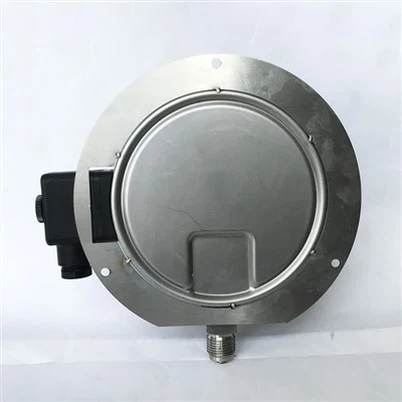
Analog thermometers, which are often mechanical in design and function, have a long and storied history dating back centuries. One of the most widely recognized types is the mercury-in-glass thermometer. This classic instrument relies on the expansion and contraction of mercury within a sealed glass tube to indicate temperature changes on a finely calibrated scale. Mercury thermometers are renowned for their robustness, precision, and reliability, particularly in clinical and medical settings where accuracy is critical. However, concerns regarding the toxicity of mercury have prompted the development of safer alternatives. For instance, alcohol-filled thermometers have emerged as a popular choice due to their lower toxicity levels. While alcohol thermometers may require more frequent calibration due to alcohol's higher vapor pressure and susceptibility to evaporation, they remain a cost-effective and widely used option. Analog thermometers, in general, are known for their affordability, ease of use, and straightforward readability, making them suitable for a wide range of general-purpose applications.
Digital Thermometers
Digital thermometers have transformed the world of temperature measurement with their unparalleled accuracy, swift response times, and exceptional readability. These instruments leverage advanced electronic sensors, such as thermistors or resistance temperature detectors (RTDs), to convert temperature into a digital signal that is displayed on a clear and easy-to-read LCD screen. Digital thermometers are available in numerous configurations to suit diverse needs. Handheld digital thermometers are compact and portable, making them ideal for personal use, such as monitoring body temperature. Probe thermometers are specifically designed for cooking and food safety, featuring long, narrow probes that can be inserted into food items to measure internal temperatures accurately. Infrared thermometers, on the other hand, utilize non-contact technology to measure surface temperatures rapidly and safely, making them indispensable in medical settings, public health campaigns, and various industrial applications. During pandemics, infrared thermometers have played a pivotal role in enabling quick and efficient temperature screenings.
Specialty Thermometers
Beyond the ubiquitous analogue and digital thermometers, speciality thermometers are tailored for specific applications that demand highly specialized features and capabilities. High-temperature thermometers, such as pyrometers, are engineered to withstand and measure temperatures exceeding 1,000°C, making them indispensable in industries like metallurgy, glassmaking, and ceramics. These instruments often utilize specialized sensors and optics to ensure accurate measurements in harsh environments. Low-temperature thermometers, conversely, are designed to operate at temperatures approaching absolute zero, making them crucial in fields such as cryogenics, material science, and medical research. Precision and stability at these extremely low temperatures are paramount, and these thermometers incorporate sophisticated materials and designs to meet these rigorous requirements. Humidity thermometers, which measure both temperature and relative humidity, are essential in meteorology, agriculture, indoor air quality monitoring, and numerous other fields where environmental conditions play a critical role. Each specialty thermometer incorporates unique technologies and design elements to ensure accuracy, reliability, and robustness in its respective domain, enabling precise temperature measurement across a wide range of applications and environments.
Thermometer Selection Principles
Measurement Range and Accuracy
Choosing the right thermometer begins with identifying the temperature range and accuracy required for your application. For instance, a cooking thermometer might need to measure temperatures up to 250°C with an accuracy of ±1°C, while a laboratory thermometer might require an even finer precision of ±0.1°C within a narrower range. Consider the maximum and minimum temperatures your thermometer will encounter and select a device with a slightly broader range to accommodate potential fluctuations and future needs.
Environment and Durability
The environment where the thermometer will be used is another critical factor. Is it exposed to moisture, chemicals, or extreme temperatures? A waterproof thermometer is essential for outdoor or marine applications, while a thermocouple or RTD might be more suitable for harsh industrial environments due to their robustness and resistance to corrosion. Consider the materials used in the thermometer's construction and ensure they are compatible with the substances you'll be measuring.
Ease of Use and Maintenance
Ease of use and maintenance are often overlooked but essential aspects. Digital thermometers, with their intuitive interfaces and automatic calibration features, are generally easier to operate and maintain than analog models. However, digital devices may require battery replacements and occasional recalibration to maintain accuracy. Choose a thermometer with clear instructions and, if possible, a warranty that covers maintenance and repairs.
Cost and Budget
Lastly, consider your budget. While high-end thermometers offer superior accuracy and features, they may not always be necessary. Evaluate the cost-benefit ratio by weighing the price against the thermometer's performance, durability, and your specific needs. In some cases, investing in a higher-quality thermometer can save money in the long run by reducing the need for frequent replacements or repairs.
Thermometer Correct Usage Methods
Before using a thermometer, ensure it is thoroughly cleaned using mild soap and water or an appropriate disinfectant, followed by a rinse with clean water and thorough drying. This step removes any dirt, grease, or debris that could interfere with accurate readings. For liquid-filled thermometers, shake them gently to ensure the liquid inside is evenly distributed, preventing bubbles or separations that could skew measurements. When placing the thermometer, ensure it is fully immersed in the medium being measured, such as a liquid or food item, for liquid-filled models. For infrared thermometers, position it at the correct distance and angle specified by the manufacturer to capture an accurate non-contact temperature reading. Always avoid exposing thermometers to direct sunlight, drafts, or heat sources, as these can artificially elevate or depress readings.

Reading and Recording

Wait patiently for the thermometer to stabilize and indicate that it has reached the temperature of the medium being measured. This stabilization time can vary depending on the type of thermometer and the thermal conductivity of the medium. For digital thermometers, read the display directly, ensuring it is lit and easy to see. For analog models, hold the thermometer at eye level and align your sight with the liquid column, noting the temperature at the very top of the liquid where it intersects with the scale. To avoid any discrepancies, record the reading immediately using a reliable method, such as writing it down on paper or entering it into a digital log. This is particularly important in critical applications such as food safety, medical checks, or scientific experiments where accuracy is paramount.
After each use, clean the thermometer again following the manufacturer's instructions, ensuring all traces of the previous measurement are removed. Store the thermometer in a safe, dry place away from extreme temperatures and humidity, which can degrade its performance over time. Regular calibration is essential to maintaining the accuracy of your thermometer. Use a known reference point, such as boiling water at sea level (100°C) or an ice-water bath (0°C), to check the thermometer's calibration. If the reading differs from the expected value, consult the manufacturer's guide for recalibration steps or seek professional assistance to ensure your thermometer remains reliable. Proper storage and regular calibration not only extend the lifespan of your thermometer but also guarantee its accuracy and reliability in various applications.