Stainless Steel Pressure Gauge: An Insight into Its Definition, Structure, Applications, and Selection Criteria
Leave a message
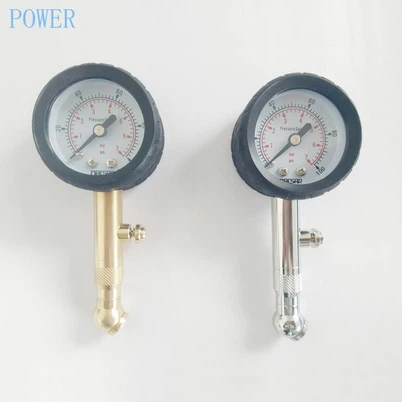
A Stainless Steel Pressure Gauge, simply put, is an instrument designed to measure and display the pressure of gases or liquids within a system. Constructed predominantly from stainless steel, these gauges offer exceptional durability, corrosion resistance, and precision, making them indispensable in various industrial and non-industrial settings. The use of stainless steel ensures that the gauge can withstand harsh environments, including high temperatures, pressure fluctuations, and exposure to aggressive chemicals, without compromising its accuracy or longevity. Essentially, a stainless steel pressure gauge serves as a critical component in monitoring and maintaining the integrity and efficiency of fluid systems, ensuring safe and reliable operations across diverse applications.
Stainless Steel Pressure Gauge: Structure Composition

Core Components
The heart of a stainless steel pressure gauge lies in its sensing element, typically a Bourdon tube, diaphragm, or bellows. These elements transform pressure variations into mechanical displacement, which is then translated into a readable pointer movement on a calibrated dial. The Bourdon tube, for instance, bends predictably with changes in pressure, driving a gear train that rotates the pointer.
Dial and Pointer Assembly
The dial, marked with pressure units and graduations, serves as the reference for interpreting the measured pressure. The pointer, attached to the gear train, indicates the current pressure by aligning with the appropriate graduation on the dial. High-visibility pointers and illuminated dials are common features in gauges designed for low-light environments.


Housing And Protection
The stainless steel casing encapsulates the gauge's internal mechanisms, providing a robust barrier against external contaminants and mechanical damage. This casing often features a transparent window, typically made of tempered glass or acrylic, allowing clear visibility of the dial and pointer. Additionally, the housing may incorporate pressure relief valves to safeguard against over-pressurization and sealing gaskets to ensure a leak-tight fit.
Connection and Mounting
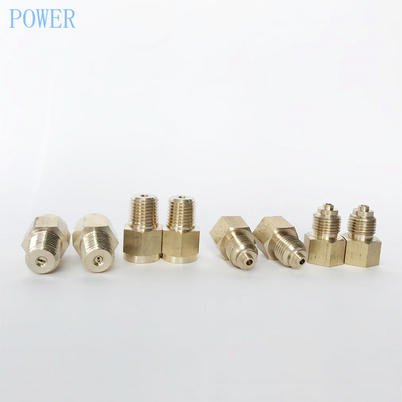
The gauge connects to the process fluid through various interface options, such as threaded connections, flange mounts, or clamp unions. These connections ensure secure attachment to the system while preventing pressure leaks. Mounting options, including panel-mount, surface-mount, and remote-mount configurations, facilitate installation in various orientations and locations within the system.

Stainless Steel Pressure Gauge: Applications


Industrial Process Control
In the manufacturing sector, stainless steel pressure gauges serve as indispensable components within process control systems. They diligently monitor pressure levels across a range of equipment, including pumps, compressors, reactors, and pipelines. Their robust design, featuring corrosion resistance and tolerance for high temperatures, positions them as the optimal choice for industries such as refining, petrochemical, and chemical processing, where such extreme conditions are not only common but also critical to operational success. These gauges ensure precision and reliability, aiding in the seamless execution of complex manufacturing processes.
Food and Beverage Processing
In the food and beverage industry, the stringent hygiene and cleanliness standards necessitate the deployment of stainless steel pressure gauges. These instruments play a crucial role in maintaining precise pressure control throughout filling, pasteurization, and packaging lines. Their ability to withstand frequent cleaning and sanitization processes without compromising performance is paramount. By ensuring consistent and accurate pressure monitoring, stainless steel gauges contribute significantly to product quality, safety, and overall consumer satisfaction within the food and beverage sector.
Marine and Offshore Operations
The marine and offshore industries heavily rely on stainless steel pressure gauges for their critical monitoring tasks. In drilling platforms, ships, and submarines, these gauges are essential for tracking system pressures under the harshest of conditions. Their resilience to seawater corrosion, combined with their ability to operate reliably under constant motion and vibration, makes them indispensable for maintaining operational efficiency and safety. These gauges help prevent accidents, ensure system integrity, and ultimately support the continuous and safe exploration and extraction of marine resources.
Hydraulic and Pneumatic Systems
Within machinery and automation, stainless steel pressure gauges play a pivotal role in both hydraulic and pneumatic systems. They provide real-time pressure data that is crucial for system control, optimization, and troubleshooting. In construction equipment, manufacturing machinery, and robotic assemblies, these gauges ensure that pressures remain within safe and optimal ranges, facilitating efficient and reliable operations. Their durability and precision contribute to reduced downtime, enhanced productivity, and lower maintenance costs across various industrial applications.
Environmental Monitoring
In the realm of environmental monitoring, stainless steel pressure gauges are essential tools for maintaining regulatory compliance and system efficiency. Water treatment plants, wastewater systems, and other environmental control applications utilize these gauges to monitor and regulate pressure in filtration, pumping, and distribution networks. Their resilience to corrosion and ability to operate reliably in harsh environments make them ideal for ensuring the safe and effective delivery of clean water and the proper management of wastewater. By providing accurate and timely pressure data, these gauges help maintain system performance, reduce environmental impact, and safeguard public health and safety.
Stainless Steel Pressure Gauge: Selection Guide
Measurement Range and Accuracy
Choosing the correct measurement range for a gauge is crucial to ensure it operates effectively within its designed parameters. Over-ranging can lead to premature wear and tear on the gauge's internal mechanisms, while under-ranging may result in inadequate measurement resolution, both compromising accuracy. Accuracy, typically expressed as a percentage of the full-scale range, must align precisely with the application's precision needs. For instance, in high-precision manufacturing processes where tiny variations can significantly impact product quality, gauges with accuracies of ±0.1% or better may be necessary. Conversely, in less critical applications, such as general-purpose industrial monitoring, gauges with broader accuracy ranges (e.g., ±1% or ±2.5%) may suffice.
Media Compatibility
When selecting a gauge, it's imperative to ensure its internal components are compatible with the media being measured. This compatibility extends to various factors, including fluid temperature, pressure spikes, viscosity, and chemical reactivity. Stainless steel, renowned for its corrosion resistance and durability, is a popular choice for many applications. However, specific stainless steel alloys, such as 316L, may be required for higher temperatures or more aggressive chemicals. For extremely harsh environments, exotic materials like Hastelloy or Monel may be necessary to ensure long-term reliability and accuracy.
Environmental Considerations
The external environment in which the gauge operates plays a pivotal role in its performance and lifespan. Factors such as ambient temperature, humidity, vibration, and exposure to corrosive agents can all adversely affect a gauge's operation. Therefore, selecting a gauge with appropriate environmental ratings is essential. For instance, in hazardous locations, explosion-proof designs are mandatory to prevent ignition sources that could trigger explosions. Sealed gauges, on the other hand, provide protection against ingress from moisture, dust, and other contaminants, ensuring reliable operation in harsh outdoor environments or industrial settings.
Installation and Mounting
The installation location, orientation, and method of mounting a gauge can significantly impact its accessibility, readability, and accuracy. Considerations such as panel space availability, visibility from the operator's standpoint, and ease of maintenance are crucial in determining the best mounting option. In confined spaces, compact gauges with low-profile designs may be preferable. For applications requiring frequent monitoring from a distance, remote mounting options, such as wireless pressure transmitters paired with digital displays, can provide real-time data without the need for physical access to the gauge.
Additional Features
Many applications have unique requirements that necessitate special features in a pressure gauge. For example, liquid-filled dials can help dampen pointer oscillation, providing a clearer, more stable reading in pulsating or vibrating environments. Electrical contacts can be incorporated for alarm or control functions, triggering alerts or shutting down systems when pressure levels exceed safe limits. Data logging capabilities, meanwhile, enable trend analysis and predictive maintenance by recording pressure readings over time. Evaluating these additional needs in advance allows for a more tailored gauge selection, ensuring that the chosen instrument meets all specific operational requirements while maximizing efficiency and safety.