What is the influence of pressure pulsation on an oxygen pressure gauge?
Leave a message

Hey there! As a supplier of oxygen pressure gauges, I've seen firsthand how various factors can impact these crucial instruments. One such factor that often flies under the radar is pressure pulsation. In this blog, I'm gonna break down what pressure pulsation is and how it affects an oxygen pressure gauge.
What is Pressure Pulsation?
Let's start with the basics. Pressure pulsation refers to the rapid and repeated changes in pressure within a fluid system. These fluctuations can occur due to a variety of reasons, like the operation of pumps, valves opening and closing, or even the natural flow characteristics of the fluid. In an oxygen supply system, pressure pulsation can be caused by the compressor's cycling, the opening and closing of regulators, or the flow of oxygen through pipes and fittings.

![NCD3XZ[P3[P[Z6XN[CT]3FF(001)](/uploads/202442773/back-connection-oxygen-pressure-gauge471c2b1c-8b61-431d-b907-d4216d2d8952.jpg)
How Pressure Pulsation Affects an Oxygen Pressure Gauge
Accuracy Issues
One of the most significant impacts of pressure pulsation on an oxygen pressure gauge is the effect on its accuracy. Pressure gauges are designed to measure the average pressure over a given period. When there are rapid pressure fluctuations, the gauge may not be able to keep up, leading to inaccurate readings. For instance, if the pressure is pulsating between 50 and 100 psi, the gauge might show a reading somewhere in the middle that doesn't accurately represent the actual pressure at any given moment. This can be a huge problem in applications where precise pressure measurements are crucial, like in medical oxygen systems.
Mechanical Wear and Tear
Pressure pulsation can also cause mechanical stress on the components of an oxygen pressure gauge. The repeated changes in pressure can cause the internal parts, such as the Bourdon tube (a common pressure-sensing element in gauges), to expand and contract rapidly. Over time, this can lead to fatigue and wear, reducing the lifespan of the gauge. In some cases, the stress can even cause the Bourdon tube to rupture, rendering the gauge useless. This not only means additional costs for replacing the gauge but also potential downtime in the system.
Vibration and Noise
Another consequence of pressure pulsation is the generation of vibration and noise. The rapid pressure changes can cause the gauge to vibrate, which can be both annoying and a sign of potential problems. The vibration can also loosen connections and fittings, leading to leaks in the system. Additionally, the noise can be a nuisance in a workplace or a medical setting, where a quiet environment is often desired.
Dealing with Pressure Pulsation
As a supplier, I understand the importance of providing solutions to these problems. There are several ways to mitigate the effects of pressure pulsation on an oxygen pressure gauge.
Dampeners
One common solution is to use a pressure dampener. A dampener is a device that smooths out the pressure fluctuations before they reach the gauge. It works by absorbing the energy of the pulsations, reducing their amplitude and frequency. This allows the gauge to receive a more stable pressure signal, improving its accuracy and reducing mechanical wear.
Proper Installation
Proper installation of the oxygen pressure gauge is also crucial. The gauge should be installed in a location where it is less likely to be affected by pressure pulsations. For example, it should be installed away from the source of the pulsations, such as pumps or valves. Additionally, the piping should be properly sized and supported to minimize vibration.
Our Oxygen Pressure Gauges
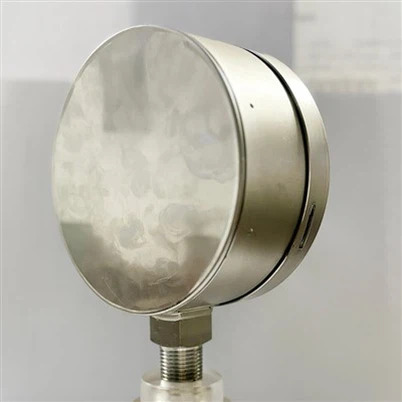
At our company, we offer a range of high-quality oxygen pressure gauges that are designed to withstand the challenges posed by pressure pulsation. We have two main types of gauges: Back Connection Oxygen Pressure Gauge and Bottom Connection Oxygen Pressure Gaue.
Our back connection gauges are ideal for applications where space is limited or where the gauge needs to be mounted in a specific orientation. The bottom connection gauges, on the other hand, are more commonly used in general-purpose applications and offer easy installation and maintenance.
Both types of gauges are built with high-quality materials and are designed to provide accurate and reliable pressure measurements, even in the presence of pressure pulsation. We also offer optional accessories, such as dampeners, to further enhance the performance of our gauges.
Why Choose Us
When it comes to choosing an oxygen pressure gauge supplier, there are several reasons why you should choose us. Firstly, we have years of experience in the industry, and we understand the unique requirements of different applications. We can provide you with expert advice on the best gauge for your specific needs.
Secondly, we offer high-quality products at competitive prices. Our gauges are manufactured to the highest standards and undergo rigorous testing to ensure their reliability and accuracy.
Finally, we provide excellent customer service. We are always available to answer your questions and provide support throughout the purchasing process. Whether you need help with installation, maintenance, or troubleshooting, we've got you covered.
Contact Us for Purchasing and Negotiation
If you're in the market for an oxygen pressure gauge, we'd love to hear from you. Whether you're a small business looking for a single gauge or a large corporation in need of a bulk order, we can offer you the right solution at the right price.
Feel free to reach out to discuss your requirements and start a negotiation. We're committed to providing you with the best products and services to meet your needs.
References
- ASME B40.100 - Pressure Gauges and Gauge Attachments
- ISO 4982 - Pressure gauges for industrial use
- Manufacturer's specifications for oxygen pressure gauges.