What is the freezing point of mercury in a mercury thermometer?
Leave a message

Mercury thermometers have been a staple in temperature measurement for centuries, valued for their accuracy and reliability. As a leading supplier of mercury thermometers, I often encounter questions about the technical aspects of these instruments, one of the most common being the freezing point of mercury. In this blog post, I'll delve into the science behind the freezing point of mercury in a mercury thermometer, its implications for thermometer use, and how it relates to our product offerings.
The Science of Mercury's Freezing Point
Mercury, a unique metal, is liquid at room temperature, which makes it ideal for use in thermometers. The freezing point of mercury is -38.83°C (-37.89°F). This low freezing point is crucial for the functionality of mercury thermometers, as it allows them to measure a wide range of temperatures without the mercury solidifying.
To understand why mercury has such a low freezing point, we need to look at its atomic structure. Mercury atoms have a unique electronic configuration that results in relatively weak metallic bonds. These weak bonds mean that less energy is required to break the structure and transition from a solid to a liquid state. In contrast, metals like iron, which have strong metallic bonds, have much higher melting points (around 1538°C or 2800°F).
Implications for Mercury Thermometers
The low freezing point of mercury enables mercury thermometers to measure temperatures down to -38.83°C. This makes them suitable for a variety of applications, from scientific research in cold environments to industrial processes that involve low temperatures.
However, it's important to note that if a mercury thermometer is exposed to temperatures below its freezing point, the mercury will solidify. When this happens, the thermometer can no longer function properly, as the solid mercury cannot expand and contract in response to temperature changes. If a thermometer has been exposed to freezing temperatures, it should be handled carefully and may need to be replaced or recalibrated.
Our Product Offerings
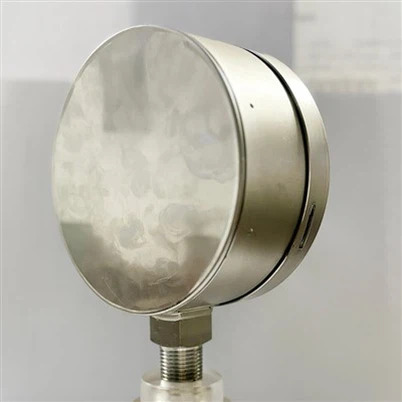
As a supplier of mercury thermometers, we offer a range of products designed to meet different temperature measurement needs. Our Bottom Connection Mercury Thermometer is ideal for applications where a bottom-mounted design is required, such as in certain types of industrial equipment. This thermometer is built to withstand a wide range of temperatures, thanks to the low freezing point of mercury.

](/uploads/42773/bottom-connection-mercury-thermometer2024103105330829ae3.jpg)
Similarly, our Back Connection Mercury Thermometer is designed for applications where a back-mounted configuration is preferred. It offers the same accuracy and reliability as our other mercury thermometers, with the added convenience of a back connection.
Quality and Safety
At our company, we prioritize quality and safety in all our products. Our mercury thermometers are manufactured to strict standards, ensuring accurate temperature measurement and long-term reliability. We also take precautions to ensure the safe handling and disposal of mercury, as it is a toxic substance.
When using a mercury thermometer, it's important to follow proper safety procedures. If a thermometer breaks, the mercury should be cleaned up immediately using appropriate methods, such as using a mercury spill kit. Additionally, mercury thermometers should be stored in a safe place, away from sources of extreme heat or cold.
Conclusion
The freezing point of mercury is a fundamental aspect of the functionality of mercury thermometers. Its low freezing point allows these thermometers to measure a wide range of temperatures, making them suitable for various applications. As a supplier of mercury thermometers, we are committed to providing high-quality products that meet the needs of our customers.
If you're in the market for a reliable mercury thermometer, we invite you to explore our product offerings. Whether you need a Bottom Connection Mercury Thermometer or a Back Connection Mercury Thermometer, we have the right solution for you. Contact us today to discuss your requirements and start a procurement discussion.
References
- CRC Handbook of Chemistry and Physics, 97th Edition
- "Mercury: Properties and Uses" by the United States Geological Survey