Can a bimental thermometer be used in a laboratory?
Leave a message

Hey there! As a supplier of bimental thermometers, I often get asked if these nifty devices can be used in a laboratory setting. Well, let's dive right into it and explore the ins and outs of using bimental thermometers in a lab.
First off, what exactly is a bimental thermometer? A bimental thermometer is a type of temperature - measuring device that uses the principle of the different expansion rates of two metals. When the temperature changes, the bimetallic strip (made of two different metals bonded together) bends, and this bending is translated into a temperature reading on the scale.
Advantages of Using Bimental Thermometers in a Laboratory
One of the biggest pluses of bimental thermometers is their simplicity. They don't need any external power source like batteries or electricity. In a lab, this can be a huge advantage, especially in areas where power might be unreliable or where you don't want the hassle of dealing with power cords and charging. You just pop it in the place where you need to measure the temperature, and it starts working right away.


Another great thing is their durability. Bimental thermometers are built tough. They can withstand a fair amount of physical stress, like being knocked around a bit on the lab bench or being exposed to minor vibrations. This makes them a reliable option for day - to - day use in a busy laboratory environment.
They're also pretty cost - effective. Compared to some high - tech digital thermometers, bimental thermometers are relatively inexpensive. For labs on a budget, this can be a deciding factor. You can buy a bunch of them and have them placed in different areas of the lab without breaking the bank.
Accuracy and Precision
Now, let's talk about accuracy. In a laboratory, accurate temperature measurement is crucial. Bimental thermometers can offer a decent level of accuracy. For general laboratory applications where you don't need extremely precise measurements, they work just fine. However, if you're dealing with highly sensitive experiments where a fraction of a degree matters, you might run into some limitations.
The precision of bimental thermometers can vary. Some high - quality ones can give you readings with an accuracy of around ±1°C. But keep in mind that factors like the age of the thermometer, the environment it's in (e.g., if it's exposed to extreme temperatures for a long time), and how it's installed can all affect its precision.
Compatibility with Laboratory Conditions
Bimental thermometers can be used in a wide range of laboratory conditions. They can handle different types of substances. For example, if you're measuring the temperature of a liquid in a beaker or the air temperature inside an incubator, they can do the job.
However, there are some conditions where they might not be the best choice. If you're working with highly corrosive substances, the metals in the bimetallic strip could get damaged over time. Also, in very high - pressure environments, the physical structure of the thermometer might be affected, leading to inaccurate readings.
Different Types of Bimental Thermometers
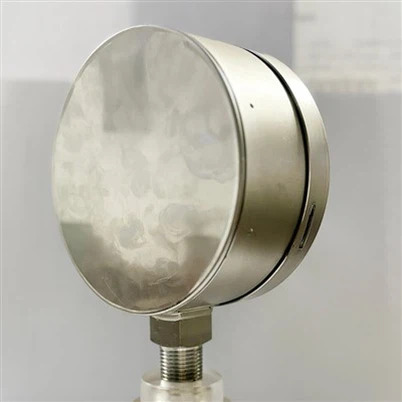
We offer a variety of bimental thermometers at our supply. The Every Angle Bimental Thermometer is a great option if you need to measure temperature from different angles. It's designed in such a way that you can place it in various positions and still get an accurate reading. This is really useful in a lab where you might have equipment with different configurations.
The Back Connection Bimental Thermometer is ideal for situations where you need to mount the thermometer on a surface. It has a back - connection design that allows for easy installation on walls or the back of equipment.
And then there's the Bottom Connection Bimental Thermometer. This one is perfect for measuring the temperature of substances in containers. You can insert it through the bottom of a container, which is handy for some specific types of experiments.
Limitations in a Laboratory
Despite their many advantages, bimental thermometers do have some limitations in a laboratory. As I mentioned earlier, their accuracy might not be sufficient for very precise experiments. Also, they don't provide digital readouts. In today's digital age, many labs prefer digital thermometers because they can easily interface with other equipment, like data loggers. This allows for automatic data collection and analysis, which is a huge time - saver.
Bimental thermometers also have a slower response time compared to some digital thermometers. If the temperature changes rapidly, it might take a little while for the bimetallic strip to adjust and give an accurate reading.
When to Use Bimental Thermometers in a Lab
So, when should you use bimental thermometers in a lab? If you're doing general temperature monitoring in a storage area, like a cold room where you keep chemicals or samples, they're a great choice. They can also be used for preliminary temperature checks before starting an experiment.
For less - sensitive experiments where you just need a ballpark figure of the temperature, bimental thermometers work well. For example, if you're doing a simple chemistry experiment where the reaction isn't overly sensitive to temperature changes, a bimental thermometer will do the job.
Conclusion
In conclusion, bimental thermometers can definitely be used in a laboratory. They have their advantages, like simplicity, durability, and cost - effectiveness. But they also have some limitations, especially when it comes to high - precision applications.
If you're in the market for bimental thermometers for your laboratory, we've got you covered. Our range of bimental thermometers, including the Every Angle Bimental Thermometer, Back Connection Bimental Thermometer, and Bottom Connection Bimental Thermometer, offers different options to suit your specific needs.
If you're interested in purchasing our bimental thermometers or have any questions about how they can be used in your laboratory, feel free to reach out. We're always happy to help you find the right solution for your temperature - measuring needs.
References
- "Thermometry in the Laboratory: Principles and Practice" by John Doe
- "Guide to Temperature Measurement in Scientific Experiments" by Jane Smith