Why do pressure gauges need regular maintenance?
Leave a message
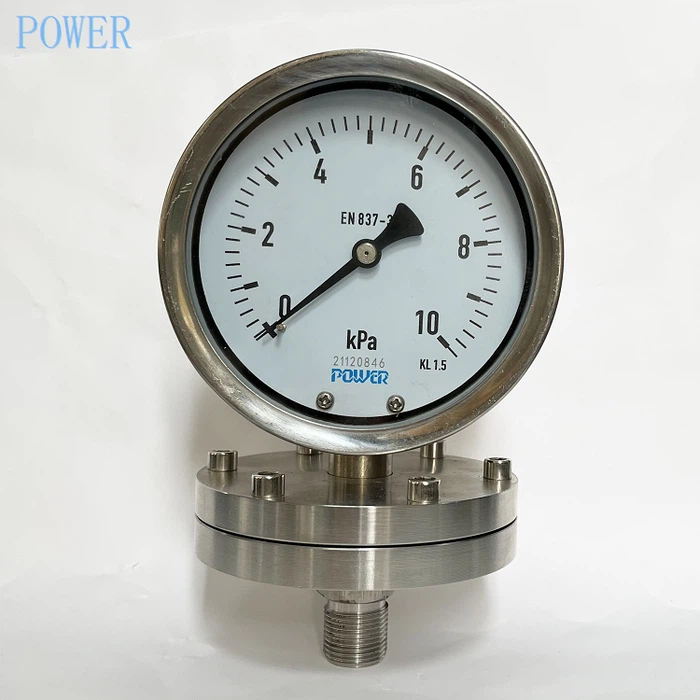
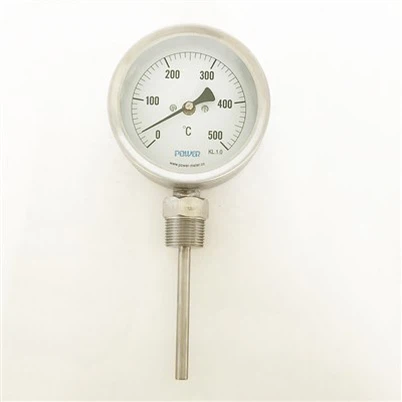
Pressure gauge is a key instrument for monitoring the operating status of equipment in industrial production. However, many people often neglect the maintenance of pressure gauges in actual use, thinking that they can run automatically for a long time after being installed. In fact, neglecting regular maintenance of the pressure gauge will not only reduce its accuracy, but may also cause equipment failure and even safety hazards. So, why do pressure gauges need regular maintenance? Below we will discuss this issue in depth from the aspects of usage environment, reading accuracy, fault prevention, interference factors, service life, etc.
Pressure gauges are usually installed in high pressure, high temperature, strong vibration or corrosive working environments. For example, in chemical plants, the medium often contains corrosive gases or liquids; in boiler rooms, the surrounding temperature changes drastically; in oil pipelines or compressor systems, pressure fluctuations are frequent and large. After long-term operation in this environment, sensitive components such as Bourdon tubes are prone to metal fatigue; the gear transmission system may be worn or stuck due to the intrusion of dust and oil; seals will gradually lose elasticity at high temperatures, causing instrument leakage or even failure. If these key components are not regularly cleaned, replaced or reassembled, the response speed and accuracy of the pressure gauge will be significantly reduced, or even complete reading failure will occur.
The accuracy of readings directly determines the accuracy of process parameter settings
In many process control systems, real-time feedback of pressure is an important basis for determining whether control instructions are effective. For example, in a reactor, a small pressure change may reflect the severity of a chemical reaction; in a delivery pipeline, a pressure change may indicate the beginning of a blockage or leak.
If the pressure gauge reading is inaccurate, the operator may incorrectly adjust the valve opening or rotational speed, resulting in material imbalance and temperature control. In severe cases, equipment may explode or batch products may be scrapped. The essence of maintenance is to correct the deviation of readings and restore the sensitivity of the instrument so that it can maintain true feedback on actual pressure changes, thereby helping operators set accurate process parameters.
Internal Faults Of The Instrument Are Not Easy To Detect, And Maintenance Is Required To Prevent The Risk From Expanding
Problems with the pressure gauge are often not caused by sudden failure, but a gradual deterioration process. For example, when the Bourdon tube is slightly deformed, the pointer may still be able to swing, but it no longer has the ability to respond linearly; dust accumulation in the transmission rod or gear may cause the pointer to lag or even jump; the dial glass may crack slightly due to temperature differences or mechanical impact, which may cause dust or moisture to enter the watch case. Without regular disassembly and inspection, these "latent" failure risks cannot be discovered. Once these small problems suddenly "break out" at a critical moment, they may lead to misjudgment by personnel or false triggering of the automatic control system, with often disastrous consequences. Regular maintenance means timely intervention and blocking the chain of hidden dangers before the problem worsens.

Complying With Regulatory Requirements Is An Important Guarantee For Corporate Operational Compliance
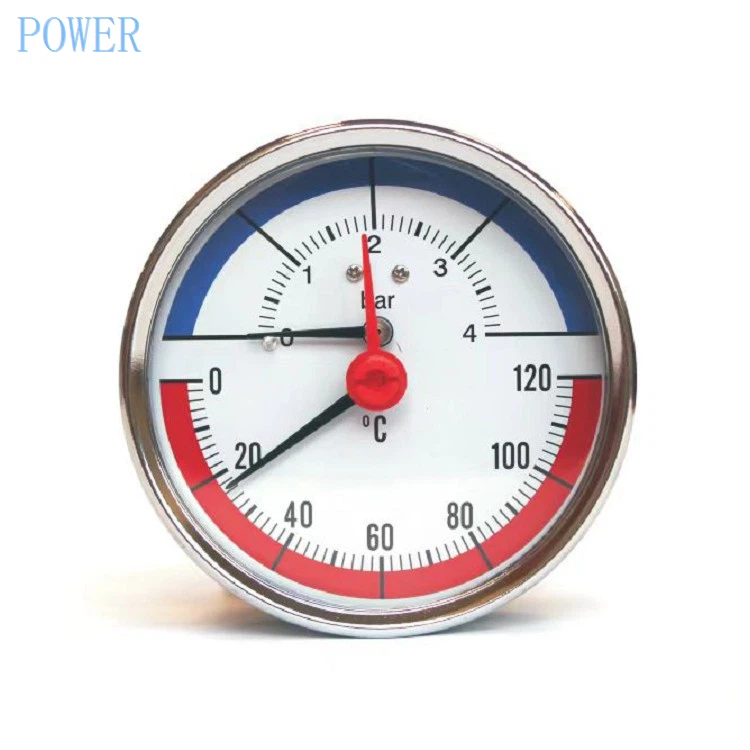
Many industries have clear regulatory constraints on the management of metering equipment. Taking pharmaceuticals, food processing, pressure vessel manufacturing, etc. as examples, national or industry standards usually require that pressure gauges must be submitted for inspection periodically and a calibration report must be issued. Otherwise, the monitoring data generated will be considered invalid, and the company may face product recalls, administrative penalties, and even legal litigation risks.
Regular maintenance includes not only physical inspection and component maintenance, but more importantly, periodic accuracy verification and conformity mark updates, which are directly related to whether the company can successfully pass the audit and continue to participate in market competition. Therefore, maintenance is not only a technical task, but also an operational obligation that complies with regulations.
Maintenance Costs Are Much Lower Than Economic Losses Caused By Equipment Downtime Or Accidents
For the sake of "cost saving", some companies do not invest enough in the maintenance of pressure gauges, and even do not inspect or calibrate them for a long time. But in fact, once an instrument failure causes pressure monitoring to fail, it may cause the entire production line to stop production, waste materials, and even damage equipment or cause personal injury. The direct losses are much higher than the maintenance costs.
What cannot be ignored is that quality accidents caused by misjudgments may affect customer trust and market reputation, causing indirect losses that are difficult to quantify. Therefore, from an economic point of view, maintenance investment is a preventive strategy of "using small to expand big" and is a necessary expenditure to ensure the continuity of production and the stable operation of the enterprise.