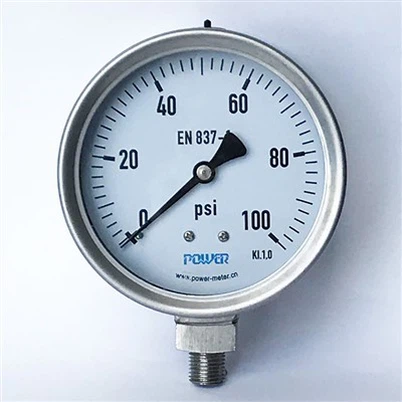
Capsule Pressure Gauge: An Essential Tool for Industrial Pressure Measurement
Leave a message
A Capsule Pressure Gauge is a precision instrument designed to measure and indicate the pressure of gases or liquids within a system. It employs a flexible, pressure-sensitive capsule as its core sensing element. When subjected to pressure, the capsule deforms predictably, and this deformation is translated into a readable pressure indication through a mechanical linkage or electronic sensor. Capsule Pressure Gauges are renowned for their reliability, durability, and accuracy across a wide range of applications, making them indispensable in various industrial sectors.
Capsule Pressure Gauge's Application Areas


Oil and Gas Industry
In the oil and gas sector, Capsule Pressure Gauges play a crucial role in monitoring and controlling critical process parameters. From drilling operations to refining and transportation, these gauges are used to measure and regulate the pressure in pipelines, storage tanks, and processing units. Their ability to withstand high pressures and harsh environments makes them ideal for this industry, ensuring the safe and efficient operation of oil and gas facilities.
Aerospace and Aviation
The aerospace and aviation industries demand extreme precision and reliability in pressure measurement due to the critical nature of flight operations. Capsule Pressure Gauges are commonly used in aircraft fuel systems, hydraulic systems, and environmental control systems to monitor and maintain pressure levels within safe operating ranges. Their compact design, high accuracy, and resistance to vibration and temperature extremes make them suitable for these demanding applications.
Automotive Manufacturing
In automotive manufacturing, Capsule Pressure Gauges are essential for ensuring the quality and safety of vehicles. They are used to measure tire pressure, engine oil pressure, and other critical fluid systems. By providing real-time pressure readings, these gauges help manufacturers identify potential issues early, prevent accidents, and enhance vehicle performance and fuel efficiency.
Marine and Offshore Engineering
Marine and offshore engineering involves complex systems operating under extreme conditions, including high pressures, corrosion, and constant motion. Capsule Pressure Gauges are widely used in these environments to monitor the pressure in subsea pipelines, risers, and other critical equipment. Their ability to withstand these harsh conditions while providing accurate and reliable pressure readings is crucial for the safe and efficient operation of marine and offshore facilities.
Pharmaceutical Industry
In the pharmaceutical industry, precision in pressure measurement is essential for ensuring the quality and safety of manufactured drugs. Capsule Pressure Gauges are used in various processes, such as fermentation, filtration, and distillation, to monitor and control pressure levels. Their high accuracy and compatibility with cleanroom environments make them ideal for this industry, contributing to the production of safe and effective medications.
Capsule Pressure Gauge Selection Tips

Measurement Range and Accuracy
Determine the pressure range and accuracy required for the application with precision. The gauge should be capable of measuring pressures within the specified range with the necessary precision to ensure reliable and safe operation. Over-ranging the gauge can cause it to reach its limits, leading to premature wear and potential inaccuracies, while under-ranging can result in insufficient sensitivity to detect important pressure changes. Ensure that the gauge's accuracy specification aligns with the tolerance levels required for your application to avoid safety hazards and ensure compliance with industry standards.
Environmental Conditions
Consider the environmental conditions in which the gauge will operate, as they can significantly impact its performance and longevity. Factors such as temperature extremes, high humidity, vibration, and exposure to corrosive chemicals can all take a toll on the gauge's materials and components. Select a gauge that is rated for the specific environmental conditions it will face and has appropriate protective features, such as sealed cases to prevent moisture ingress, or corrosion-resistant materials to withstand harsh chemicals. Consider using gauges with thermal compensation or other environmental compensation features to minimize the effects of temperature and other environmental variables.


Media Compatibility
Ensure that the gauge is compatible with the media it will be measuring to avoid potential damage or inaccurate readings. Different gases and liquids can have varying effects on the gauge's materials and sensing elements, including causing corrosion, clogging, or altering the gauge's reading due to density or viscosity differences. Check the manufacturer's specifications to confirm compatibility and consider using gauges with specific materials or coatings designed to withstand the media being measured. Additionally, ensure that the gauge's pressure connections and seals are compatible with the media to prevent leaks and maintain accuracy.
Installation and Maintenance Considerations
Think about the installation and maintenance requirements of the gauge to ensure long-term reliability and minimize operational costs. Consider factors such as access to the installation location, ease of calibration and maintenance, and the gauge's overall durability. Selecting a gauge that is easy to install and maintain can reduce downtime and operational costs, while choosing a durable gauge can extend its lifespan and reduce the need for frequent repairs or replacements. Look for gauges with features such as easy-to-read displays, remote sensing capabilities, and modular designs that allow for easy access to internal components for maintenance and calibration. Additionally, consider the gauge's warranty and the availability of technical support and repair services from the manufacturer to ensure ongoing reliability and support.

Liquid Filled Gauge Usage Precautions
Proper Filling and Venting
Ensure that the gauge is properly filled with the specified liquid and vented to avoid trapped air bubbles, which can cause inaccurate readings and potentially lead to hazardous situations. Trapped air can compress or expand with temperature changes, further compromising the accuracy of the gauge. Follow the manufacturer's instructions for filling and venting procedures meticulously, which may include specific techniques for bleeding air from the system and ensuring complete liquid fill. Proper filling and venting are crucial for the long-term reliability and accuracy of the gauge.
Temperature Considerations
The liquid inside the gauge can expand or contract with temperature changes, significantly affecting the pressure reading. It's imperative to be aware of the gauge's temperature rating and operating limits to prevent inaccuracies caused by thermal expansion or contraction of the filling liquid. Exposure to extreme temperatures can also damage the gauge's internal components, leading to premature failure. Where possible, install the gauge in an environment with stable temperatures or use thermal insulation to mitigate temperature fluctuations. Additionally, monitor the gauge's performance regularly in varying temperature conditions to detect and address any drift in readings promptly.
Orientation and Mounting
Mount the gauge in the correct orientation to prevent the filling liquid from obscuring the pointer or causing premature wear on the gauge's internal components. Incorrect mounting can also lead to leakage or inaccurate readings due to gravity-induced pressure changes. Follow the manufacturer's recommendations for mounting position and angle, ensuring that the gauge is securely fastened to prevent vibrations or shock from affecting its accuracy. Consider using vibration isolators or shock absorbers if the gauge is installed in a high-vibration environment. Proper orientation and mounting will help ensure optimal performance, longevity, and safety.
Regular Inspection and Maintenance
Regularly inspect the gauge for signs of wear, leakage, or damage. Check the filling liquid level and refill as necessary to maintain accuracy. Look for any corrosion, cracks, or debris that could affect the gauge's performance. Follow the manufacturer's maintenance schedule for calibration and other preventive maintenance tasks, such as cleaning and lubrication of moving parts. Calibration should be performed using traceable standards to ensure that the gauge readings are accurate and compliant with industry standards. Keep a detailed maintenance log to track inspections, repairs, and calibrations, ensuring that the gauge continues to perform reliably and safely.