What types of bimental thermometers are there?
Leave a message

Hey there! As a supplier of bimetal thermometers, I'm super excited to share with you the different types of bimetal thermometers out there. Bimetal thermometers are pretty cool devices that use the principle of thermal expansion of two different metals bonded together to measure temperature. They're widely used in various industries, from food processing to HVAC systems, and even in some home appliances. So, let's dive right in and explore the different types!

![33P717XL_M`8Z4]X)TX(RTU(001)](/uploads/42773/bottom-connection-bimental-thermometer20241031051800f3412.jpg)
1. Bottom Connection Bimetal Thermometer
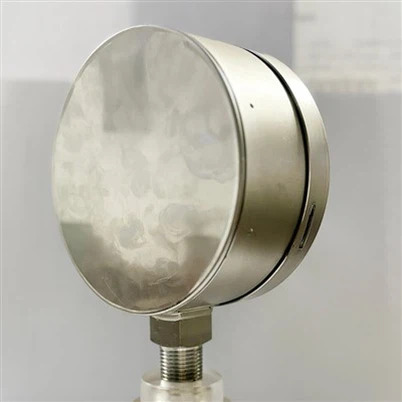
The Bottom Connection Bimetal Thermometer is a popular choice in many industrial applications. This type of thermometer has its connection at the bottom, which makes it ideal for measuring the temperature of liquids or gases in tanks, pipes, or other vessels.
One of the main advantages of the bottom connection bimetal thermometer is its easy installation. You can simply insert it into the bottom of a tank or a pipe, and it will start providing accurate temperature readings. This makes it a great option for applications where you need to monitor the temperature at the bottom of a container, like in a fermentation tank in the food and beverage industry.
Another benefit is its durability. Since the connection is at the bottom, it's less likely to be damaged by external factors such as accidental bumps or vibrations. This makes it a reliable choice for long - term use in harsh industrial environments.
2. Every Angle Bimetal Thermometer
The Every Angle Bimetal Thermometer is a versatile option that lives up to its name. Unlike some other thermometers that can only be read from a specific angle, this one allows you to take temperature readings from just about any angle.
This is extremely useful in situations where you may not have direct access to the front of the thermometer. For example, in a crowded industrial control panel, you might not be able to stand directly in front of the thermometer to read it. With an every - angle bimetal thermometer, you can easily read the temperature from the side or even from an oblique angle.
It also offers flexibility in installation. You can mount it in different positions without worrying about the readability of the temperature scale. This makes it a great choice for applications where space is limited or where the installation location is not ideal for a traditional thermometer.
3. Back Connection Bimetal Thermometer
The Back Connection Bimetal Thermometer is designed with the connection at the back. This type of thermometer is often used in applications where you need to mount it on a panel or a wall.
One of the key advantages of the back - connection bimetal thermometer is its clean and professional appearance when installed on a panel. It gives a neat look to the control panel or the equipment where it's mounted. This is especially important in industries where aesthetics and organization are valued, such as in some high - tech manufacturing facilities.
In terms of functionality, it provides accurate temperature readings just like other types of bimetal thermometers. The back connection allows for a more streamlined installation process, especially when you're dealing with a panel - mounted setup. You can easily connect the thermometer to the appropriate wiring or piping from the back, without having to worry about any interference in the front.
Other Types of Bimetal Thermometers
Apart from the three main types we've discussed above, there are also a few other variations of bimetal thermometers.
- Dial Bimetal Thermometers: These are the most common type. They have a circular dial with a temperature scale and a pointer that moves according to the temperature. Dial bimetal thermometers are easy to read and are used in a wide range of applications, from home thermostats to industrial temperature control systems.
- Strip Bimetal Thermometers: These are often used in applications where a compact and simple temperature measurement is required. They consist of a thin strip of bimetal that bends with temperature changes. Strip bimetal thermometers are commonly used in some consumer products like ovens and refrigerators.
- Miniature Bimetal Thermometers: As the name suggests, these are small - sized thermometers. They're used in applications where space is extremely limited, such as in some electronic devices or in medical equipment.
Choosing the Right Bimetal Thermometer
When it comes to choosing the right bimetal thermometer for your application, there are a few factors you need to consider.
- Temperature Range: Different applications require different temperature ranges. For example, if you're measuring the temperature of a freezer, you'll need a thermometer that can measure very low temperatures. On the other hand, if you're monitoring the temperature of an industrial furnace, you'll need a thermometer that can withstand and measure high temperatures.
- Accuracy: The level of accuracy you need depends on the nature of your application. In some industries, like pharmaceuticals, a high level of accuracy is crucial. In other less critical applications, a slightly lower level of accuracy might be acceptable.
- Environmental Conditions: Consider the environment where the thermometer will be used. If it's a harsh industrial environment with high levels of moisture, dust, or vibrations, you'll need a thermometer that can withstand these conditions.
Why Choose Our Bimetal Thermometers
As a supplier, we take pride in offering high - quality bimetal thermometers. Our thermometers are made from top - notch materials, ensuring durability and long - term performance. We also offer a wide range of temperature ranges and accuracies to meet the diverse needs of our customers.
Our team of experts is always ready to help you choose the right thermometer for your specific application. Whether you're a small business owner or a large industrial corporation, we can provide you with the best solution at a competitive price.
If you're in the market for bimetal thermometers, we'd love to hear from you. Whether you have questions about the different types, need help with installation, or are ready to place an order, don't hesitate to reach out. We're here to make the process as smooth and hassle - free as possible for you.
Conclusion
In conclusion, bimetal thermometers come in various types, each with its own unique features and advantages. The bottom connection, every - angle, and back - connection bimetal thermometers are just a few examples of the diverse range of options available. By understanding your specific application requirements and considering factors like temperature range, accuracy, and environmental conditions, you can choose the right bimetal thermometer for your needs.
If you're interested in learning more or making a purchase, feel free to contact us. We're looking forward to working with you and helping you find the perfect bimetal thermometer solution.
References
- "Thermometry: Fundamentals and Applications" by D. R. Wark
- "Industrial Temperature Measurement" by Peter Dunn