What is the thermal conductivity of SS Material Adaptor?
Leave a message

Hey there! As a supplier of SS Material Adaptors, I often get asked about the thermal conductivity of these nifty little devices. So, I thought I'd take a few minutes to break it down for you and explain what it means for your applications.
First off, let's talk about what thermal conductivity is. Simply put, it's a measure of how well a material can conduct heat. Think of it like a highway for heat - the higher the thermal conductivity, the faster heat can travel through the material. In the case of SS Material Adaptors, understanding their thermal conductivity is crucial because it affects how they perform in various environments.
Stainless steel, the primary material used in SS Material Adaptors, is known for its decent thermal conductivity. Compared to some other metals, it's not the best conductor, but it's definitely good enough for a wide range of applications. The thermal conductivity of stainless steel can vary depending on its composition and the specific grade. Generally, it falls in the range of about 12 - 16 W/(m·K) at room temperature.
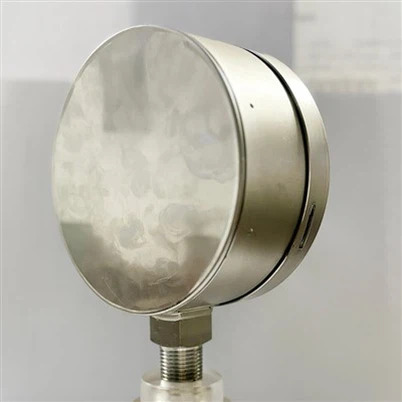
Now, you might be wondering why this matters. Well, if you're using an SS Material Adaptor in a high - temperature environment, the thermal conductivity determines how quickly heat will be transferred through the adaptor. This can be important for preventing overheating and ensuring the longevity of your equipment. For example, in a pressure gauge system, if the adaptor can't transfer heat effectively, it could lead to inaccurate readings or even damage to the gauge.
On the other hand, if you're in a situation where you need to insulate a certain area, the relatively moderate thermal conductivity of stainless steel can be an advantage. It won't let heat pass through too quickly, providing a bit of a buffer.


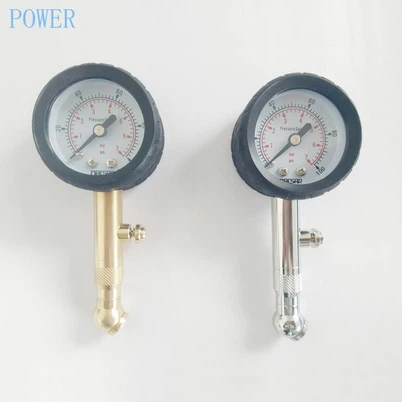
Let's compare SS Material Adaptors with Brass Material Adaptor. Brass has a higher thermal conductivity than stainless steel, usually around 100 - 120 W/(m·K). This means that brass adaptors can transfer heat much faster. So, if you need rapid heat transfer in your application, brass might be a better choice. But brass also has its drawbacks. It's more prone to corrosion in certain environments compared to stainless steel.
As a supplier of SS Material Adaptor, I've seen firsthand how important it is to choose the right adaptor based on thermal conductivity and other factors. We offer a wide range of SS Material Adaptors with different specifications to meet the diverse needs of our customers.
When selecting an SS Material Adaptor, you should also consider the thickness of the adaptor. A thicker adaptor will generally have a lower effective thermal conductivity because heat has to travel through more material. However, a thicker adaptor might also be more durable and better able to withstand high - pressure situations.
Another factor is the surface finish of the adaptor. A smooth surface can sometimes enhance heat transfer because it reduces the resistance to heat flow. But in some cases, a rougher surface might be preferred for better adhesion or to prevent slipping.
Now, let's talk about how we test the thermal conductivity of our SS Material Adaptors. We use state - of - the - art equipment to measure the heat transfer rate through the adaptors under controlled conditions. This allows us to provide accurate data to our customers so they can make informed decisions.
In addition to thermal conductivity, we also focus on other properties of our SS Material Adaptors, such as their mechanical strength, corrosion resistance, and chemical stability. These properties work together to ensure that our adaptors perform well in different applications.
For example, in the food and beverage industry, where hygiene is of utmost importance, the corrosion resistance of our SS Material Adaptors is a key selling point. Stainless steel is resistant to many chemicals and can be easily cleaned, making it suitable for use in contact with food products.
In the automotive industry, the mechanical strength of our adaptors is crucial. They need to be able to withstand the vibrations and stresses associated with vehicle operation.
If you're in the market for an SS Material Adaptor, I encourage you to reach out to us. We can help you determine the best adaptor for your specific needs based on factors like thermal conductivity, application requirements, and budget. Whether you're a small business or a large corporation, we're here to provide you with high - quality products and excellent customer service.
Contact us today to start the conversation about your SS Material Adaptor needs. We're eager to work with you and help you find the perfect solution for your application.
References
- "Thermal Conductivity of Metals" - Handbook of Materials Science
- "Properties of Stainless Steel" - Journal of Metallurgy Research