What is a car tire gauge?
Leave a message

A car tire gauge is an indispensable tool in the automotive world, playing a pivotal role in ensuring both the safety and efficiency of vehicles. As a dedicated supplier of car tire gauges, I have witnessed firsthand the significance of these devices and the diverse needs of our customers. In this blog, I'll delve into what a car tire gauge is, its types, functions, and why it's crucial for every car owner.
What is a Car Tire Gauge?
At its core, a car tire gauge is a measuring instrument designed to determine the air pressure inside a vehicle's tires. Maintaining the correct tire pressure is not just a matter of preference; it's a fundamental requirement for optimal vehicle performance. Under - inflated tires can lead to increased fuel consumption, uneven tire wear, and even reduced handling and braking capabilities. On the other hand, over - inflated tires can make the ride uncomfortable and increase the risk of a blowout.
A car tire gauge provides a simple and accurate way to check the tire pressure, allowing drivers to take corrective action if necessary. It typically gives readings in pounds per square inch (PSI), the most common unit of measurement for tire pressure in the United States, although other units like kilopascals (kPa) or bars are also used in different parts of the world.
Types of Car Tire Gauges
There are several types of car tire gauges available on the market, each with its own set of features and advantages.
Digital Tire Gauges
Digital tire gauges are becoming increasingly popular due to their ease of use and high level of accuracy. These gauges use electronic sensors to measure the tire pressure and display the result on a digital screen. They often come with additional features such as backlighting, which makes them easy to read in low - light conditions, and the ability to switch between different units of measurement. Digital gauges are generally more expensive than other types, but their precision and convenience make them a favorite among many car owners.
Dial Tire Gauges
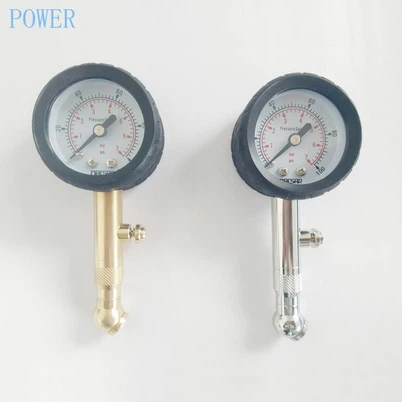
Dial tire gauges are another common type. They have a circular dial with a needle that points to the current tire pressure reading. These gauges are relatively simple in design and are often more affordable than digital ones. They are also durable and can withstand rough handling. There are different sizes of dial tire gauges available, such as the 40mm Dial Tire Gauge and the 63mm Dial Tire Gauge. The larger the dial, the easier it is to read the pressure, especially for those with less - than - perfect eyesight.
Stick Tire Gauges
Stick tire gauges, also known as pencil gauges, are the most basic and inexpensive type of tire gauge. They consist of a simple tube with a plunger that extends when the gauge is pressed against the tire valve. The length of the plunger extension corresponds to the tire pressure, which can be read from markings on the gauge. Stick gauges are lightweight, portable, and easy to carry in a glove compartment or toolbox. However, they may not be as accurate as digital or dial gauges, and reading the pressure can be a bit tricky, especially for beginners.
How Does a Car Tire Gauge Work?
The basic principle behind all car tire gauges is the same: they measure the force exerted by the compressed air inside the tire. When the gauge is attached to the tire valve, the air from the tire enters the gauge, causing a mechanical or electronic reaction that results in a pressure reading.
![_D{7[ALW]ENC3[N63W{HRVU_tmb(001)](/uploads/42773/40mm-dial-tire-gauge2024103103575098240.jpg)
![XHNQPYBO(4ZJ]`GQ5}YYD49_tmb(001)](/uploads/42773/63mm-dial-tire-gauge20241031040223a9fa0.jpg)
For digital gauges, the air pressure is detected by a sensor, which converts the pressure into an electrical signal. This signal is then processed by a microprocessor and displayed on the screen. Dial gauges use a mechanical mechanism, usually a Bourdon tube. When air enters the tube, it expands, causing the needle on the dial to move and indicate the pressure. Stick gauges rely on the movement of a plunger, which is pushed out by the air pressure, and the position of the plunger is read against a scale.
Why is a Car Tire Gauge Important?
The importance of a car tire gauge cannot be overstated. Here are some key reasons why every car owner should have one:
Safety
Properly inflated tires are essential for safe driving. Under - inflated tires can cause the vehicle to handle poorly, especially in wet or slippery conditions. They also generate more heat, which can lead to tire failure and potentially dangerous situations on the road. Over - inflated tires, on the other hand, are more prone to punctures and blowouts, which can be extremely hazardous at high speeds. By regularly checking the tire pressure with a gauge, drivers can ensure that their tires are in good condition and reduce the risk of accidents.
Fuel Efficiency
Tire pressure has a direct impact on fuel efficiency. Under - inflated tires increase the rolling resistance of the vehicle, which means the engine has to work harder to move the car forward. This results in higher fuel consumption. According to the U.S. Department of Energy, keeping tires properly inflated can improve gas mileage by up to 3%. Over time, this can lead to significant savings at the pump.
Tire Longevity
Maintaining the correct tire pressure helps to ensure even tire wear. When tires are under - or over - inflated, the tread wears unevenly, which can shorten the lifespan of the tires. By using a tire gauge to check the pressure regularly and adjusting it as needed, car owners can extend the life of their tires and save money on replacements.
Choosing the Right Car Tire Gauge
When choosing a car tire gauge, there are several factors to consider.
Accuracy
Accuracy is perhaps the most important factor. You want a gauge that can provide reliable and precise readings. Digital gauges are generally the most accurate, followed by dial gauges. Stick gauges may have a margin of error, so if accuracy is a top priority, you may want to invest in a digital or high - quality dial gauge.
Ease of Use
The gauge should be easy to operate, especially if you're not very mechanically inclined. Digital gauges are often the easiest to read, with their clear digital displays. Dial gauges with large dials are also easy to read, while stick gauges may require a bit more practice to use correctly.
Durability
Since the gauge may be subjected to rough handling and different environmental conditions, it should be durable. Look for gauges made from high - quality materials that can withstand wear and tear.
Additional Features
Some gauges come with extra features such as backlighting, auto - shutoff, or the ability to store multiple readings. These features can add to the convenience of using the gauge, but they may also increase the cost.
As a Supplier
As a car tire gauge supplier, we understand the diverse needs of our customers. We offer a wide range of high - quality tire gauges, including digital, dial, and stick gauges, to meet different preferences and budgets. Our products are sourced from reputable manufacturers and are rigorously tested to ensure accuracy and durability.
We believe in providing excellent customer service and support. Whether you're a professional mechanic or a casual car owner, our team is always ready to help you choose the right tire gauge for your needs. We also offer competitive pricing and fast shipping, so you can get your gauge quickly and start taking care of your tires.
If you're interested in purchasing car tire gauges for your business or personal use, we encourage you to contact us. We're open to discussing your specific requirements and can provide you with detailed product information and quotes. Our goal is to build long - term relationships with our customers by providing top - notch products and services.
Conclusion
In conclusion, a car tire gauge is a simple yet essential tool for every car owner. It helps to ensure the safety, efficiency, and longevity of your vehicle's tires. By choosing the right gauge and using it regularly, you can keep your tires in optimal condition and enjoy a smoother, safer, and more economical driving experience.
If you have any questions or would like to discuss your tire gauge needs, please don't hesitate to reach out. We're here to assist you in making the best choice for your situation.
References
- U.S. Department of Energy. "Fuel Economy Tips."
- Automotive Service Association. "Tire Pressure Maintenance Guide."
- Tire manufacturers' websites for tire pressure specifications.