Comprehensive Analysis of Bimetal Thermometer
Leave a message
A bimetal thermometer is an essential instrument in the realm of temperature measurement, leveraging the unique properties of bimetallic strips to indicate temperature changes. Simply put, a bimetal thermometer consists of two strips of different metals bonded together. Due to their differing coefficients of thermal expansion, these strips curl or uncurl when subjected to temperature variations, thus converting these changes into a readable temperature indication, typically via a pointer on a calibrated scale. This reliable and cost-effective device finds its place in diverse environments, from industrial settings to household applications, where accurate temperature monitoring is crucial.
Bimetal Thermometer: Structural Analysis


Core Components and Design
At the heart of every bimetal thermometer lies the bimetallic strip, a fundamental component composed of two metals bonded together, often nickel and iron or copper and nickel. The choice of metals is strategic, as they exhibit distinctly different rates of thermal expansion. When the ambient temperature rises, the metal with the higher coefficient of thermal expansion elongates more than its counterpart, causing the strip to bend. Conversely, in cooler temperatures, it bends in the opposite direction. This bending action is harnessed to drive the pointer mechanism.
Pointer and Scale Assembly
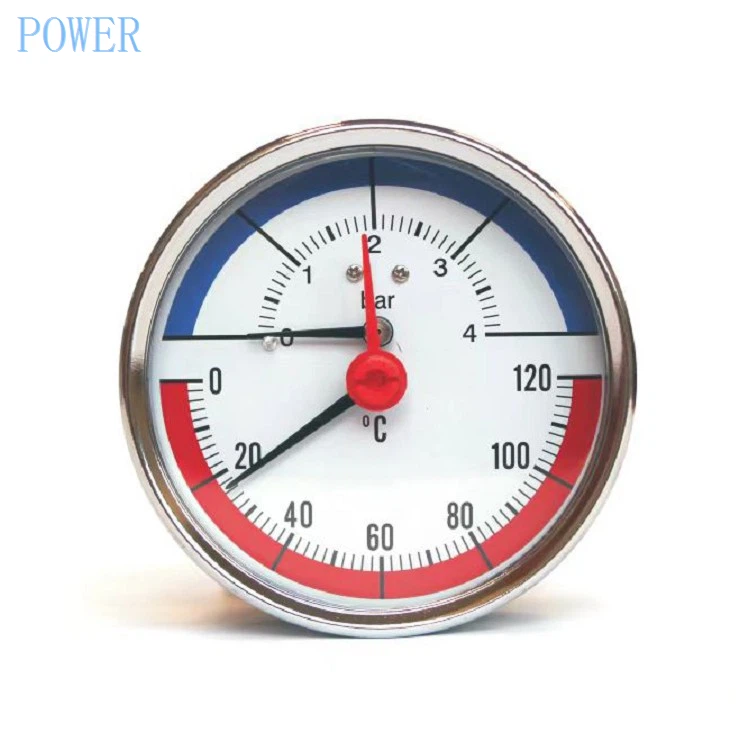
Attached to the bimetallic strip is a pointer, which moves across a calibrated scale as the strip bends. The scale, marked with temperature increments, allows for easy reading of the current temperature. Some models feature a magnified lens over the scale for better visibility, especially in low-light conditions or when precision is paramount.
Case and Sealing
Encasing the internal mechanisms is a robust case, typically made of stainless steel or other durable materials, designed to protect the thermometer from environmental factors like moisture, dust, and mechanical shock. The case also ensures that the working fluid (if any, in some variations) remains contained. Seals around the case and pointer shaft prevent leaks and maintain the integrity of the instrument.
Temperature Range and Accuracy
Bimetal thermometers are manufactured to cater to various temperature ranges, from sub-zero to extremely high temperatures, depending on the application. Accuracy, while generally good for general-purpose use, may vary depending on the specific model and its calibration. High-precision models undergo rigorous testing and calibration processes to ensure minimal deviation from actual temperatures.
Bimetal Thermometer: Areas of Application
Industrial Applications
In the industrial sector, bimetal thermometers are indispensable for monitoring process temperatures in manufacturing, refining, and power generation facilities. They are often installed in pipelines, tanks, and reactors to ensure that operational temperatures remain within safe and efficient limits. Their rugged design and ability to withstand harsh conditions make them ideal for these demanding environments. Additionally, they are used in HVAC systems to regulate air temperature in large facilities, ensuring a comfortable environment while optimizing energy usage. Bimetal thermometers also play a critical role in food processing plants, where precise temperature control is essential for maintaining product quality and safety.
Laboratory and Research Settings
Scientific research and laboratory work frequently require precise temperature control and measurement. Bimetal thermometers, while not as accurate as some electronic instruments, offer a reliable and low-maintenance alternative for applications where high precision is not the utmost priority. Their simplicity and ease of use make them a favorite among educators for teaching purposes, providing students with a hands-on understanding of thermal expansion principles. In research labs, bimetal thermometers can be found in various experiments, from chemistry to biology, where they help monitor temperature changes during reactions or environmental studies.
Household and Automotive Use
In everyday life, bimetal thermometers can be found in kitchens, greenhouses, and garages, providing a straightforward way to monitor ambient or specific-area temperatures. They are commonly used in ovens and stovetops to ensure cooking temperatures are reached and maintained, helping to achieve perfect culinary results. Greenhouse enthusiasts rely on bimetal thermometers to create optimal growing conditions for plants by monitoring and adjusting indoor temperatures. Automotive applications include dashboard-mounted thermometers that indicate engine coolant temperature, crucial for maintaining vehicle performance and avoiding overheating. Additionally, bimetal thermometers are used in home heating systems to regulate indoor temperatures, contributing to energy efficiency and comfort in residential settings.
Bimetal Thermometer: Maintenance Guidelines
Periodic inspections are vital to ensure the continued accuracy and reliability of bimetal thermometers. Check for signs of wear, corrosion, or damage to the case, pointer, and bimetallic strip. Any visible damage should prompt immediate repair or replacement to prevent inaccuracies. Inspect the mounting hardware and connections to ensure they are secure and free from rust or degradation. Verify that the scale is still legible and that the pointer moves freely without sticking or hesitation.
Keep the thermometer clean by wiping it down with a damp cloth. Avoid using abrasive cleaners or solvents that could damage the case or seals. Ensure that the pointer and scale are clear of dirt or debris that could obscure readings. For stubborn stains or residues, use a mild soap solution and rinse thoroughly with water. Dry the thermometer completely before reinstalling or storing it.
Regular calibration against a known accurate temperature source is crucial for maintaining accuracy. Manufacturers often provide calibration procedures or recommend professional services for this purpose. Note any deviations from the expected readings and adjust accordingly, or replace the thermometer if it consistently falls out of calibration. It's advisable to perform calibration checks at regular intervals, such as annually or after exposure to extreme conditions, to ensure ongoing precision.
When not in use, store bimetal thermometers in a cool, dry place away from direct sunlight and extreme temperatures. Protect them from mechanical shock and ensure they are properly packaged if transported. Store them in their original packaging or a protective case to prevent accidental damage. Avoid exposing them to moisture or condensation, which can cause corrosion over time.
Over time, even the best-maintained bimetal thermometers may require replacement due to wear and tear. Consider upgrading to models with enhanced features such as digital displays, remote sensing capabilities, or broader temperature ranges to meet evolving needs. When selecting a new thermometer, consider factors like environmental conditions, required accuracy, and ease of installation. Properly dispose of old thermometers according to local regulations to minimize environmental impact.
Working Principle of Bimetallic Thermometer

Composition of the Sensing Element
The core of the bimetallic thermometer consists of a sensing element formed by laminating two metallic strips, commonly brass and invar alloy, which exhibit different thermal expansion coefficients. When subjected to temperature changes, these strips expand or contract to varying degrees due to their inherent material properties.
Deformation and Bending
Upon temperature alterations, the metal strip with the higher coefficient of thermal expansion elongates more significantly compared to the other. This differential expansion results in bending of the bimetallic strip, with the curvature directed towards the strip with the lesser expansion. The magnitude of bending increases with the temperature differential, providing a mechanical response proportional to the temperature change.


Mechanical Transmission to Indication
The bending deformation of the bimetallic strip is translated into pointer deflection via a mechanical transmission mechanism. Typically, the bending force actuates a connected shaft, which in turn rotates an indicator pointer. This mechanical linkage ensures that the pointer marks the correct temperature value on the scale, offering a visual representation of the sensed temperature.
Range and Application
Designed for medium to low temperature measurements, bimetallic thermometers can directly assess the temperature of liquids, vapors, and gases within a range of -80°C to 500°C. Their robust construction and reliability make them suitable for diverse applications, including industrial process control, heating systems, and scientific experiments, where precise temperature monitoring is crucial.