Scenario applications and advantages of earthquake-resistant pressure gauges
Leave a message
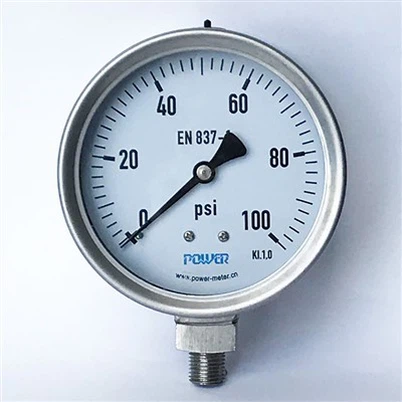
The seismic pressure gauge is an instrument that can help people better understand the pressure on buildings when an earthquake occurs. It can collect data during an earthquake, analyze the bearing capacity of the building, and provide us with more specific suggestions for earthquake-proof and earthquake-resistant measures. It has a very wide range of application scenarios and advantages.
It is suitable for various buildings, including residential buildings, commercial buildings, bridges, underground garages, etc. During the design and construction phase of a building, the seismic pressure gauge can be used to evaluate the seismic safety of the building and guide designers and engineers to optimize the selection of structures and materials during the design process. During the use and operation phase of the building, the seismic pressure gauge can monitor the stress of the building during an earthquake, and promptly remind people to take emergency measures to ensure personnel safety and reduce property losses.
Secondly, the advantages of the seismic pressure gauge are also very obvious. On the one hand, the working principle of the seismic pressure gauge is very simple and easy to understand. It only needs to be installed in a suitable position in the building. When the building is shaken by an earthquake, the seismic pressure gauge will automatically work, record the vibration of the building, and provide data support. On the other hand, the data performance of the seismic pressure gauge is very powerful. It can record detailed information such as the building's stress conditions and vibration frequency, and provide intelligent earthquake warning and assessment results for the building based on this information, allowing people to better understand the extent of earthquake disasters and the safety status of buildings, and thus take more targeted earthquake-resistant measures.